Feverfew: The Headache Herb, the Old Garden Guardian
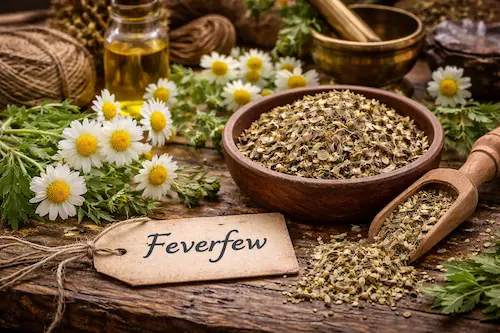
Feverfew (Tanacetum parthenium) doesn’t look dangerous. It’s small, daisy-like, almost cheerful. But herbalists have respected this plant for centuries because it has a very specific talent: it works with inflammation, circulation, and tension — especially in the head.
It was traditionally grown right outside doors and along paths, not just for beauty, but because people reached for it often.
Where to Buy Feverfew
If you’re looking for feverfew (the herb), here are reliable places you can find it:
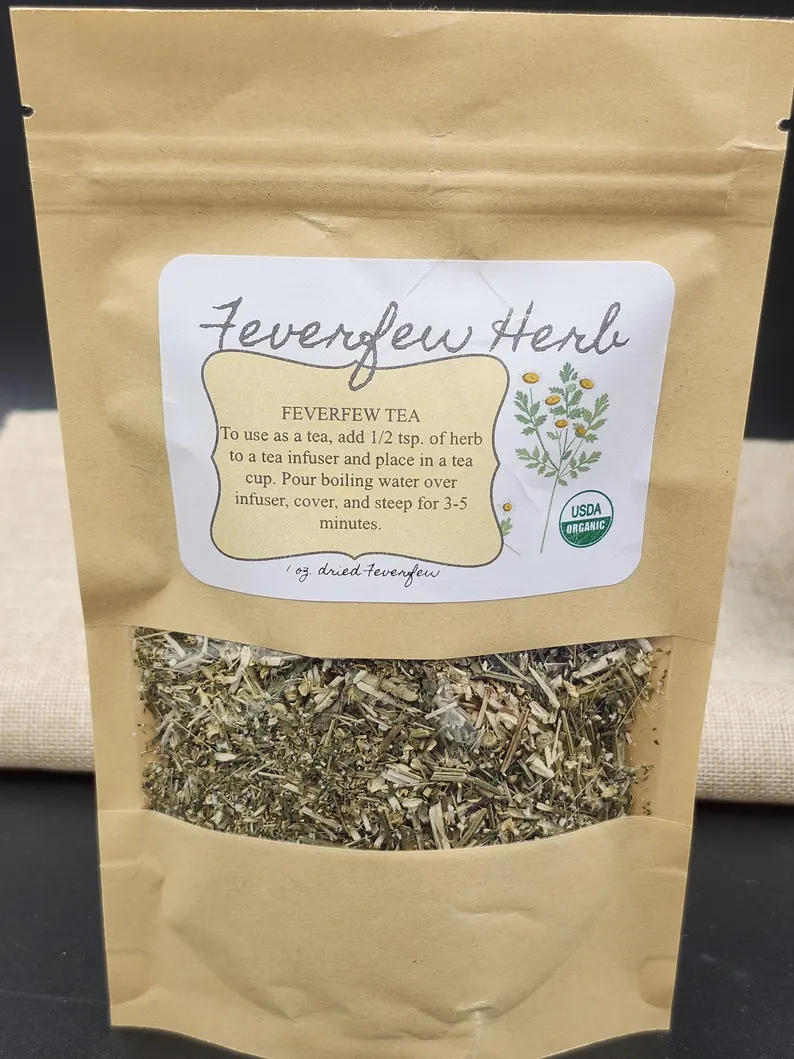
🌱 1. The Steampunk Buddha
We offer responsibly sourced feverfew that’s ideal for tea blends, ritual use, and herbal apothecary work — chosen with intention and quality in mind.
☕ 2. Local Herb & Natural Markets
Health food stores and natural markets with bulk herbs sometimes stock feverfew in the loose-leaf section. Ask if they can order it if it’s not on the shelf.
🪄 3. Farmers Markets & Herb Farms
Growers at local markets or herbal farms may offer fresh or dried feverfew, especially in spring and summer.
Tips for buying feverfew:
-
Look for organic if possible.
-
Dried whole leaf is best for tea or ritual blends.
-
Store in a sealed jar in a cool, dry place.
A Long History of Use
The name “feverfew” comes from the Latin febrifugia, meaning “fever driver.” Historically, it was used for fevers, aches, and general sickness. But over time, its reputation narrowed into something very specific.
Feverfew became known as the migraine herb.
Old European herbals, monastery gardens, and later folk medicine all mention it for headaches, pressure, and dizziness. Even today, it’s one of the most studied herbs for migraine support.
The Head & the Nervous System
Feverfew has traditionally been used to support:
• migraines and recurring headaches
• head pressure and tension
• inflammation
• circulation
• menstrual-related head pain
Rather than acting like a sedative, feverfew works more on the level of vascular tension and inflammatory response. That’s why people often take it preventively rather than only when pain hits.
It’s not soothing like chamomile. It’s corrective.
Energetics: Bitter, Cooling, Drying
In herbal energetics, feverfew is considered:
• bitter
• cooling
• drying
• moving
This makes it a classic choice when heat, stagnation, or inflammation is part of the picture — flushed face, throbbing temples, pressure behind the eyes, irritability, or head pain that feels “hot.”
Other Traditional Uses
Beyond headaches, feverfew appeared in folk medicine for:
• fevers and colds
• menstrual discomfort
• joint pain
• digestion (as a bitter tonic)
• clearing congestion
It was also planted as a protective garden herb, believed to ward off illness and negative influences.
Taste, Form, and Use
Feverfew is… not tasty. It’s sharply bitter and slightly numbing to the tongue. Historically, people chewed fresh leaves (brave souls), but today it’s more commonly used as:
• dried tea blends
• tinctures
• capsules
• glycerites
It’s often paired with herbs like ginger, skullcap, peppermint, or lemon balm to soften its edge.
Folk & Magical Associations
Feverfew has been connected with:
• protection
• breaking harmful cycles
• healing after illness
• mental clarity
• guarding the home
Because of its strong effect on headaches, it also gained a reputation as a plant that “clears the mind” and drives out lingering influences.
Safety Notes
Feverfew should not be used during pregnancy. Some people experience mouth irritation from fresh leaves. Those on blood-thinning medications or with bleeding disorders should consult a professional before regular use.