Skullcap Herb: The Quiet Protector of the Nervous System
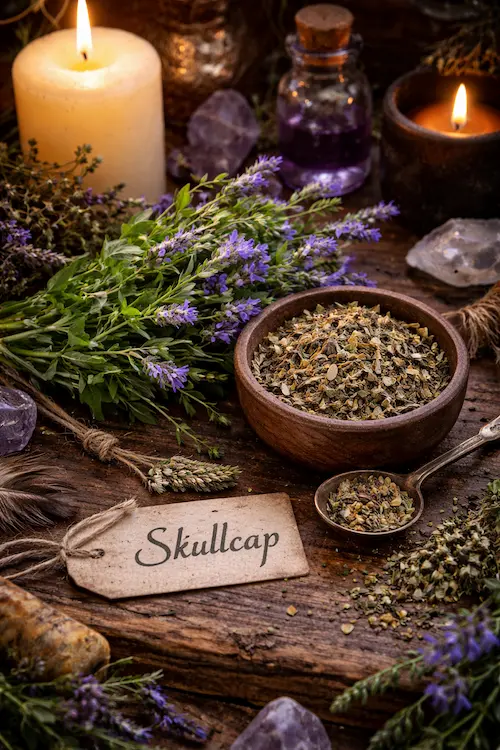
Skullcap (Scutellaria lateriflora) has a long history in traditional herbalism as a plant of the nerves — not a sedative in the knockout sense, but a restorer. It’s the kind of herb herbalists reach for when someone is wound too tight, running on empty, overstimulated, or stuck in that edgy space between exhausted and wired.
There are actually a few plants called “skullcap,” but the one most commonly used in Western herbalism is American skullcap. It grows near streams and wetlands, with delicate little blue flowers that don’t look like much… which is funny, because the herb itself is a quiet heavyweight.
🌿 Where to Get Skullcap
You can find ethically sourced skullcap through The Steampunk Buddha, where herbs are chosen with intention and respect for both plant and practitioner.
Skullcap offered through The Steampunk Buddha is selected for ritual, tea blending, and spiritual work — suited for those who work with herbs not just as ingredients, but as allies. Each batch is meant to support calm, nervous system restoration, and deeper inner practices.
Whether you’re crafting teas, spell blends, smoke offerings, or altar work, skullcap from The Steampunk Buddha is offered as a grounding, high-quality botanical for both healing and magic.
A Nervine, Not a Tranquilizer
Skullcap is classified as a nervine — an herb that supports and tones the nervous system. Instead of forcing sleep or dulling the senses, it works more like a reset button. Herbalists traditionally used it for:
• frazzled nerves
• restlessness and circular thoughts
• tension held in the body
• emotional overload
• burnout and nervous exhaustion
It’s especially loved by people who feel tired but can’t relax — the ones whose bodies are exhausted but whose minds won’t shut up.
Skullcap doesn’t numb. It softens the edges.
Emotional and Energetic Uses
Beyond the physical nervous system, skullcap has always had a reputation as an emotional herb. Old herbal texts often describe it as helpful for people who are:
• overwhelmed
• hypersensitive
• grieving
• irritable from long stress
• carrying emotional tension in the body
Energetically, skullcap is often associated with protection, release, and gentle grounding. Many modern herbalists use it in blends meant for spiritual exhaustion, emotional processing, meditation, or decompression after intense experiences.
It’s a good herb for people who feel like their nervous system never really gets to stand down.
What Skullcap Tastes Like
On its own, it’s mildly bitter, grassy, and a little mineral. Most people blend it with herbs like lemon balm, oat straw, mint, rose, or chamomile to soften the taste and round it out. When paired well, it makes a deeply comforting tea.
Traditional Preparations
Skullcap has traditionally been used as:
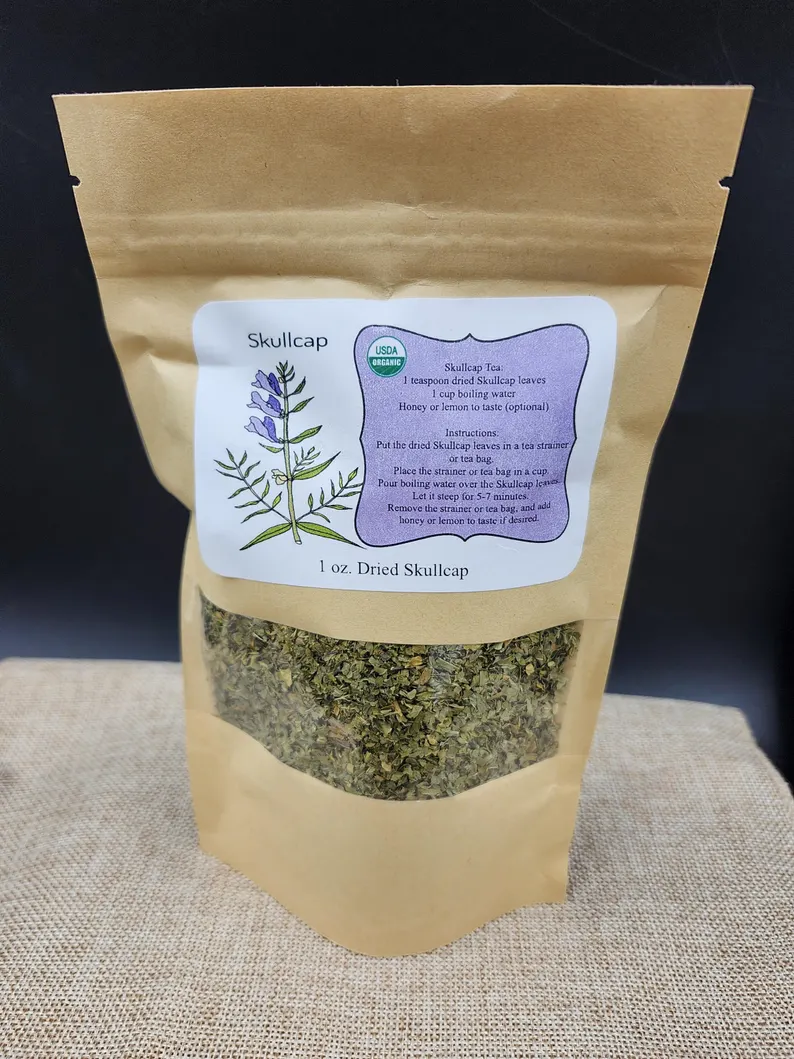
• tea (infusion)
• tincture
• glycerite
• blended into nervine formulas
Tea is wonderful for gentle daily support. Tincture is often used when someone wants a more concentrated, fast-acting option.
A Plant for the Modern Nervous System
Skullcap was once used for things like “melancholy,” “hysteria,” and “nervous agitation.” Today we’d call that chronic stress, anxiety, burnout, sensory overload, and emotional fatigue.
Same plant. New language.
In a world that constantly overstimulates the nervous system, skullcap remains what it’s always been: a quiet ally. Not flashy. Not dramatic. Just deeply, reliably calming.
Important Notes
Skullcap is generally considered gentle, but like all herbs, it isn’t for everyone. Anyone who is pregnant, on medication, or managing a medical condition should check with a qualified healthcare provider before using it regularly.