Mugwort: The Dream Herb, the Witch’s Plant, the Wild Nervous System Ally
Mugwort (Artemisia vulgaris) has been used by humans for thousands of years. It grew along roadsides, near villages, at the edges of fields — always close, always watching. Where skullcap whispers, mugwort hums. This is a plant tied to dreams, intuition, cycles, and the deep body.
It has a long, tangled history across cultures: European folk medicine, Asian traditions, Indigenous practices, medieval midwifery, and modern herbalism all know mugwort well.
Where to Buy Mugwort
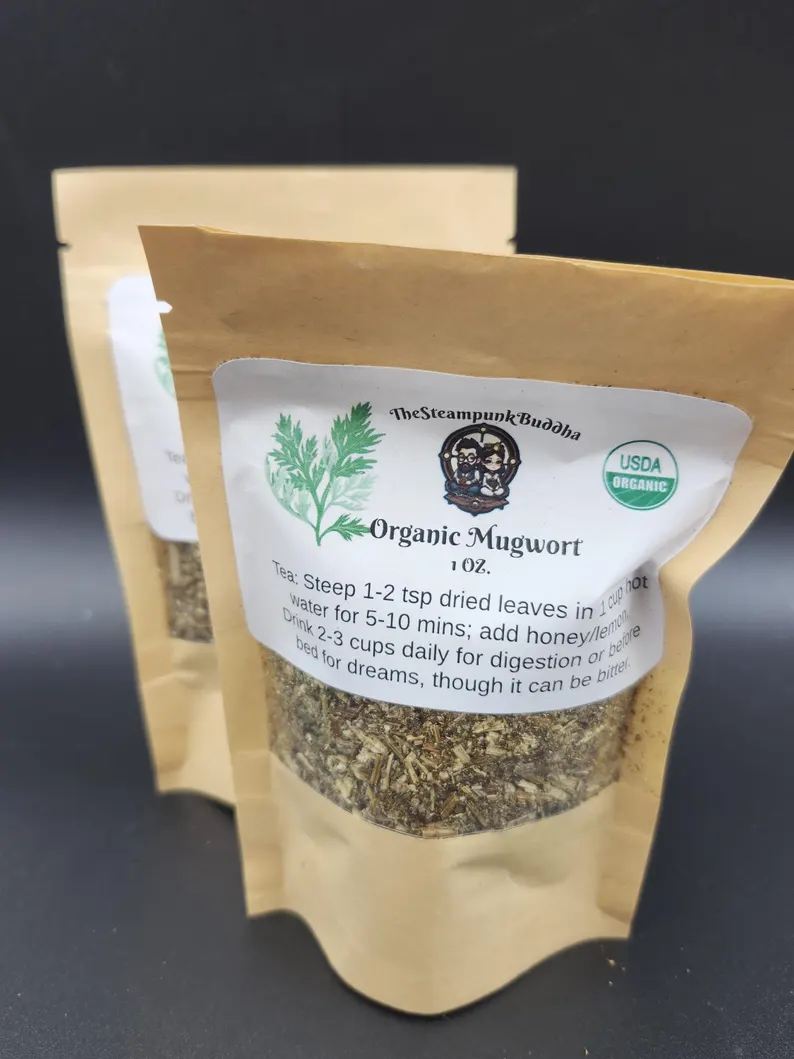
If you’re looking for mugwort that actually feels alive with intention, getting it from The Steampunk Buddha hits different. This isn’t mass-produced, dusty back-shelf herb shop stuff — it’s the kind of mugwort chosen for dreamers, ritualists, and quiet witches who work with purpose. Mugwort from The Steampunk Buddha is curated with magic in mind, perfect for dream work, divination blends, smoke cleansing, and spellcraft focused on intuition, protection, and inner sight.
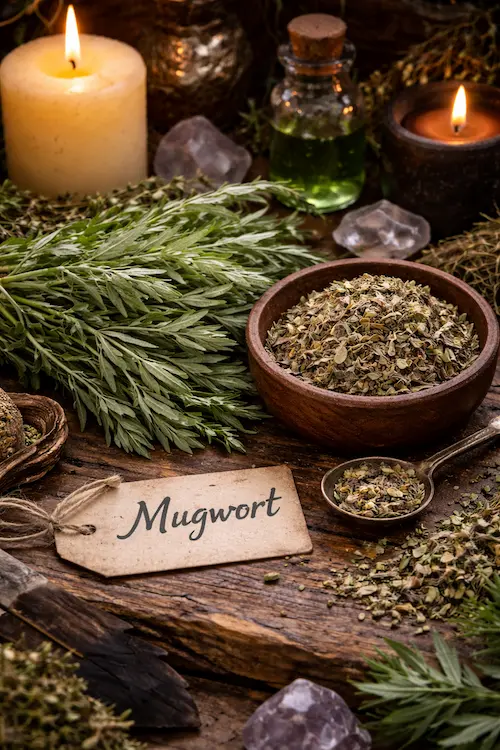
A Plant of the Moon and the Mind
Mugwort has been associated with the moon, the nervous system, and the liminal state between waking and sleep. Traditionally, it was used to support:
• vivid and lucid dreams
• nervous tension
• menstrual comfort
• digestion and bile flow
• circulation and warming the body
It’s probably most famous today as a dream herb. Many people drink mugwort tea, use it in smoke blends, or place it near the bed to encourage deeper, more symbolic, or more memorable dreams.
Not always “sweet dreams.” Honest ones.
Nervous System & Emotional Uses
Herbalists have long used mugwort for people who feel disconnected from their bodies, emotionally stagnant, or mentally foggy. It’s considered gently stimulating to the nervous system — not calming like chamomile, not sedating like valerian. More like a subtle nudge back into awareness.
It’s often chosen when someone feels:
• mentally dull or dissociated
• creatively blocked
• emotionally numb
• energetically “off”
• restless but not tired
Mugwort tends to bring things to the surface.
Digestive & Physical Traditions
On a physical level, mugwort has historically been used as a bitter and warming herb, meaning it stimulates digestion and circulation. Folk traditions used it to support:
• sluggish digestion
• bloating and cramping
• menstrual discomfort
• cold hands and feet
• general stagnation in the body
In Traditional Chinese Medicine, mugwort is famous for moxibustion, where the dried herb is burned near acupuncture points to warm and move energy.
Aroma, Flavor, and Preparation
Mugwort smells unmistakably herbal: sharp, green, slightly camphorous, with a wild edge. The taste is bitter, earthy, and aromatic. Not cozy. Not dessert tea. Very much a “medicine plant.”
It’s commonly prepared as:
• tea or infusion
• tincture
• dream sachets
• smoke blends
• ritual incense
• moxa sticks
Most people blend mugwort with gentler herbs like mint, lemon balm, rose, or skullcap to balance its intensity.
Magical & Folk Associations
Across cultures, mugwort has been linked to:
• psychic sight
• dreamwork
• protection
• astral travel
• women’s cycles
• crossroads and thresholds
It was tucked into travelers’ shoes, hung above doors, woven into midsummer garlands, burned in rituals, and used by midwives and folk healers alike.
Mugwort lives at the edge. And it works best there.
A Word of Caution
Mugwort is a powerful herb. It is not recommended during pregnancy, and it should be used mindfully and in moderate amounts. Sensitive people may find it overstimulating. As always, anyone with medical conditions or on medications should consult a qualified professional before regular use.